
A recent BBC report confirms what many of us have observed in boardrooms: experienced women face “double jeopardy” at work. They’re sidelined precisely when their expertise is most valued.
For decades, the solution has been mentorship. We’ve encouraged women to find mentors, seek advice, and build relationships. Yet despite all of this, progress toward gender parity on corporate boards has stalled.
That’s why I believe mentorship alone cannot take us where we need to go. We need sponsorship.
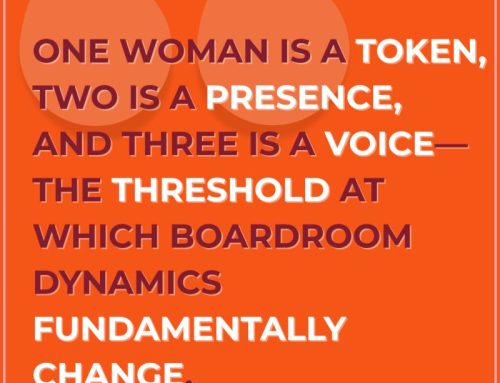
Here’s why the distinction is so important. Mentorship is about giving advice. Sponsorship is the active use of your influence and political capital to place someone. A mentor offers guidance over coffee. A sponsor recommends a specific woman for a board seat, advocates for her on the Nominating and Governance committee, and takes reputational risk by endorsing her readiness. At Women Get On Board Inc. (WGOB), we believe in the Power of Three: one woman in the boardroom is a token, two is a presence, and three is a voice.
Sponsorship is how we move from one to three. Without sponsors actively placing women, we remain stuck. I encourage serving board directors to reflect: Who are you currently sponsoring for a board seat? Not mentoring, but actively sponsoring and advocating for her candidacy. I invite women seeking board roles to consider: Are you asking for sponsorship or settling for mentorship?
Have you identified who in your network has actual decision-making power and asked them explicitly to advocate for you?
As the stalled progress shows, advice without advocacy doesn’t drive change. I encourage you to use your power.
Read the full report here: Older women ‘disappear’ from BBC presenting roles, review finds



Leave A Comment